The 3rd Annual Workshop · previously at IUI and ASIS&T
Past Meets Future
Human-AI interaction for digital humanities and cultural heritage. A full-day workshop bringing HCI and AI researchers together with the people who keep the world's memory: the digital humanities and the GLAM sector (galleries, libraries, archives, and museums). Last year we mapped the field's challenges. This year we explore solutions, together.
2026full day · workshops day
VirginiaVT Academic Building One · near Washington DC
until Sept 111:59 pm Anywhere on Earth
2026then rolling, within 3-5 days
About the Workshop
Digital humanities and cultural heritage hold invaluable societal narratives, yet scholars and practitioners face hard problems of data quality, accessibility, and engagement. Human-AI interaction can help at scale, but its potential remains largely untapped. This workshop is about the bridge: researchers and practitioners from HCI, AI, the digital humanities, and GLAM institutions, in one room, exploring shared methods.
Technologists need the expertise of humanities scholars and heritage professionals; humanities scholarship gains new reach when builders and makers are at the table. The work succeeds only with both. So the workshop runs on mentoring and collaboration: we are doing this together, helping each other out.
Keynote
Trust in the Loop: How Libraries, Archives, and Museums Can Balance Institutional Expertise and AI-Assisted Discovery
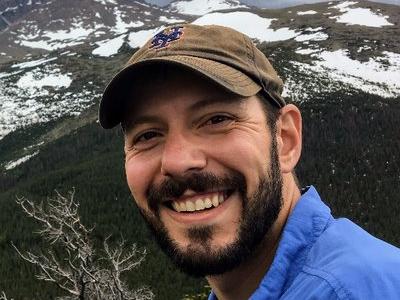
Libraries, archives, and museums are widely trusted as stewards of authoritative records. At the same time, the data underlying these collections is heterogeneous, shaped by different institutional practices, and often tied closely to the historical and scientific contexts in which it was created. As institutions begin to apply AI methods to support discovery and interpretation, a central challenge emerges: how do we maintain trust in authoritative records while inviting users into the uncertainty and iteration of AI-driven processes?
This presentation draws on lessons learned from AI pilot projects across the Smithsonian's science and history museums and research centers, with a special focus on the recent Revolution Crossroads project. Revolution Crossroads is a multi-institutional, public-facing initiative bringing together collections data from several large, national-level cultural heritage organizations. Working across datasets from the American Revolutionary War era (1770–1810) that differ in format, structure, standards, and historical context, the project is using AI to explore connections at scale.
Across these pilots, unsupervised AI methods have sat comfortably alongside institutional expertise because they organize rather than assert. I will share examples of how multimodal embedding models have assisted in collections discovery, evaluation, and even accessible alt-text image description. Throughout, the goal is not to replace curatorial judgment but to make it more visible — revealing where models are confident, where they are guessing, and where expert intervention matters most. Trust, in this framing, comes not from hiding uncertainty but from designing systems that keep experts and users in the loop.
Mike Trizna is a data scientist in the Smithsonian Institution Office of the Chief Data and AI Officer, which is situated within the central Office of Digital and Innovation. Previous to joining the Office of Digital and Innovation, Mike worked for 12 years at the Smithsonian National Museum of Natural History as a bioinformatician.
In his current role, he collaborates with researchers and collections staff across the many units of the Smithsonian to pilot responsible applications of AI to their current work. He is also focused on capacity-building data science skills for Smithsonian staff, fellows, and interns.
Mike leads the Smithsonian Carpentries data upskilling team, co-manages the Smithsonian AI Interest Group, and is heavily involved in the operation of the global organization AI4LAM (AI for Libraries, Archives, and Museums).
Organizers
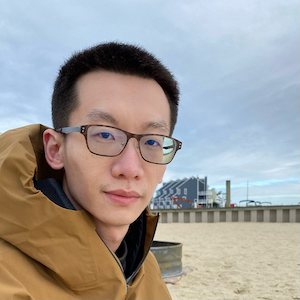
Virginia Tech
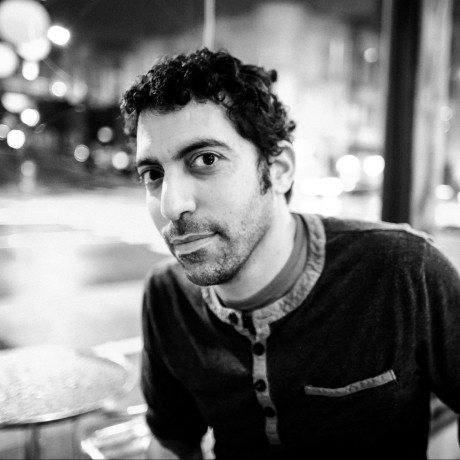
Northeastern University Oakland
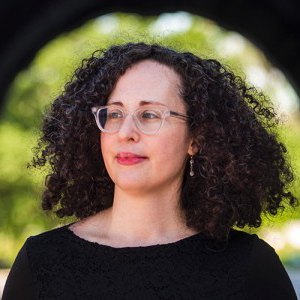
University of Maryland iSchool
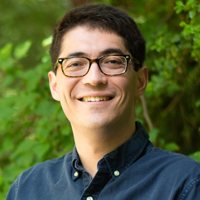
University of Washington iSchool
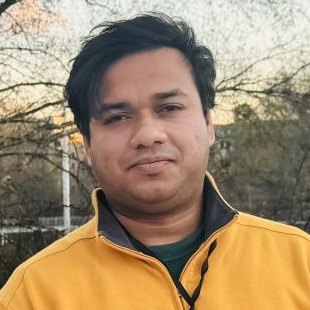
Carnegie Mellon University
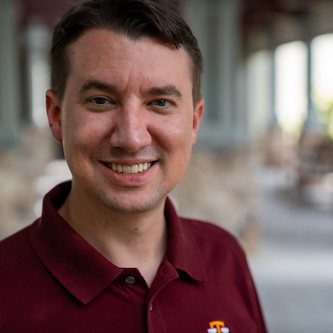
Virginia Tech
CONTACT · PASTMEETSFUTUREHAIWORKSHOP@GMAIL.COM
Editions
Supported By
